Explore Vetiver Grass
Discover the remarkable power of Vetiver Grass — nature’s own solution for sustainable land management and environmental restoration.
-
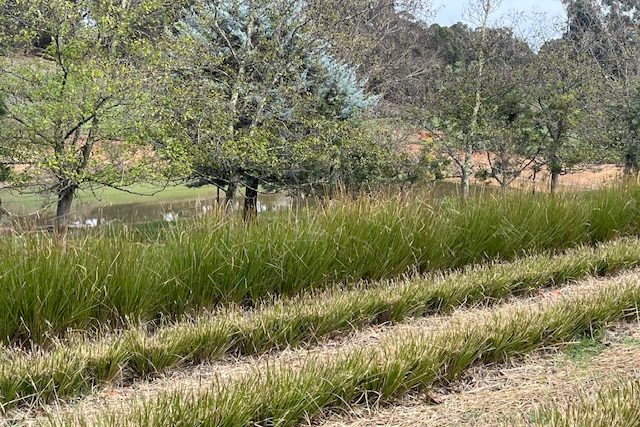
What is Vetiver Grass
Vetiver Grass is a simple, practical, inexpensive, low maintenance and effective means of soil and water conservation, sediment control, land stabilisation and rehabilitation.
It is tolerant to climatic and environmental variations including drought, flooding and submergence and air temperature variations from -15 degrees to 55 degrees. The stiff and erect stems create dense hedges that can withstand high velocity flows, trap sediment and control water runoff protecting against erosion.
Thriving in a variety of soils including sandy, sodic, saline, waterlogged, acidic, alkaline and soils with toxic contaminants, the deep, extensive and interlocking root systems that grow vertically reaching depths of over 4 (four) metres provide, but are not limited to, the following additional benefits:
- create dense underground reinforcing root wall structures which have been shown to improve soil strength up to 45%;
- the roots develop from the nodes, if buried, providing for the to grass rise with the ground level developing natural terraces; and
- favourable conditions are created by the Vetiver Grass root system for soil microbial activity to improve soil fertility.
Implementing the use of Vetiver Grass into the land restoration and rehabilitation plans for mined and otherwise previously industrially purposed land holds environmental restoration and rehabilitation plus the ability to provide for and corporate and social responsibility obligations and aspirations. Vetiver Grass has the properties to fulfil organisational obligations benefiting both the land, and its people.
Implementing the use of Vetiver Grass into the land restoration and rehabilitation plans for mined and otherwise previously industrially purposed land holds environmental restoration and rehabilitation plus the ability to provide for and corporate and social responsibility obligations and aspirations. Vetiver Grass has the properties to fulfil organisational obligations benefiting both the land, and its people.
Species Overview
Using the correct species of Vetiver Grass makes it a safe, sustainable, and low-maintenance solution for land rehabilitation, infrastructure protection, and landscape restoration projects.
-
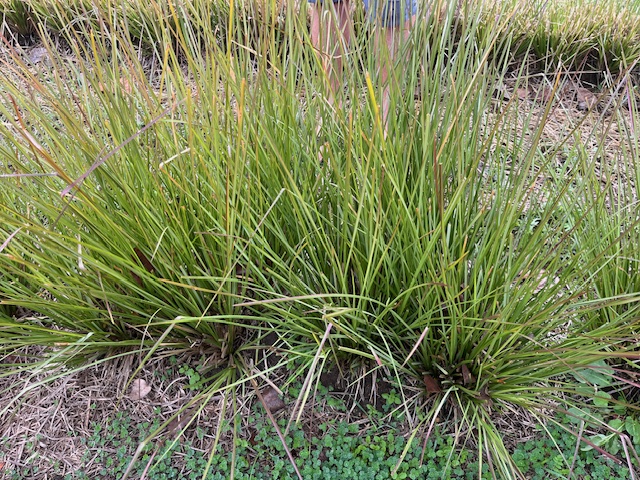
Vetiver Grass (Chrysopogon zizanioides)
Chrysopogon zizanioides and Vetiveria zizanioides refer to the same plant species, commonly known as Vetiver Grass. The name changes from Vetiveria zizanioides to Chrysopogon zizanioides reflects a taxonomic reclassification. Here are some key points about this plant:
Taxonomy and Nomenclature:
- Previous Name: Vetiveria zizanioides
- Current Name: Chrysopogon zizanioides
- Family: Poaceae (Grass family)
Vetiver Grass is a versatile plant known for its extensive root system and a range of ecological and industrial uses. There are both invasive and non-invasive varieties of Vetiver Grass. The non-invasive variety is often referred to in the context of its controlled use and benefits.
Characteristics of Non-Invasive Vetiver Grass:
- Root System: Vetiver Grass is renowned for its deep and dense root system. The roots can grow up to 3 meters (10 feet) deep, which helps in soil stabilization and erosion control. This characteristic is particularly valuable for preventing soil erosion and improving soil structure. The deep root system also enhances water infiltration and reduces runoff.
- Growth Habit: Vetiver Grass grows in dense clumps, which makes it effective in forming a physical barrier against soil erosion. The grass itself typically grows to a height of about 1 to 1.5 meters (3 to 5 feet).
- Uses: Vetiver is used for soil conservation, as it helps in controlling soil erosion, stabilizing riverbanks, and rehabilitating degraded lands. It is also used in landscaping for its aesthetic qualities and in agriculture to improve soil health.
- Non-Invasive Nature: The non-invasive variety of vetiver is cultivated in such a way that it does not spread uncontrollably. The commonly used commercial genotypes of vetiver grass are sterile and do not produce viable seeds, ensuring that the plant does not spread uncontrollably. This controlled growth is achieved by maintaining appropriate planting density and managing its expansion. Unlike some invasive species, non-invasive vetiver does not aggressively spread outside its designated area, making it a suitable choice for various environmental management practices.
- Environmental Benefits: The non-invasive vetiver variety is beneficial for controlling soil erosion, enhancing soil fertility, and improving water quality. Its application in agroforestry and reforestation projects has shown positive results in land management
Important: The phrase “Non-invasive Vetiver Grass” applies only to the sterile Monto vetiver strain, and, if planting Monto Vetiver, it must be propagated vegetatively from known Monto sources, and NEVER propagated by seed. Fertile varieties should not be planted as they may produce seed and are potentially invasive. Only sterile cultivars such as “Monto” should be planted.
 Westcoast Vetiver Grass